
ProduCT CONCEPT
NewsWise: Smarter tools for reading and understanding the news
Five AI-powered browser extensions and dashboards that help readers cut through bias, understand context, verify sources, and turn passive news reading into action.
My research at Dow Jones and Dotdash Meredith found that only 4% of readers finish a full article. The entire news industry was designing for a reading behavior that almost nobody exhibited. NewsWise is my response to that finding — five tools, each targeting a specific failure point in how people actually consume news.

TOOL 01
Sentiment Analysis
People are reading more news than ever — and understanding less of it. My research at Dow Jones/The Wall Street Journal and Dotdash Meredith surfaced a consistent set of barriers: readers lack historical context for the stories they encounter, can’t easily assess the credibility of the journalists writing them, are rarely exposed to opposing viewpoints, and feel powerless and manipulated in the face of difficult news.
TOOL 02
InContext
A Chrome extension that auto-detects key terms in any news article and surfaces historical timelines, legal precedents, and plain-language explainers in a sidebar panel. Readers see what happened before, what led to this moment, and why it matters — without leaving the page.

TOOL 03
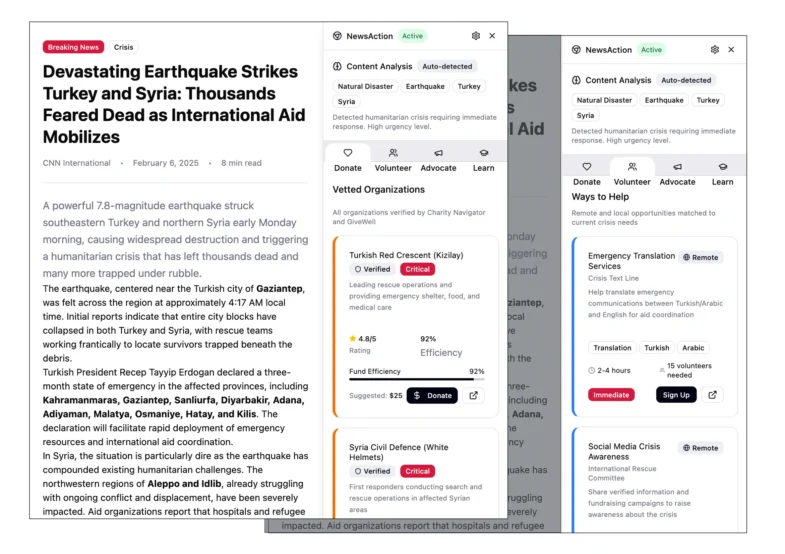
NewsAction
A Chrome extension that analyzes news articles in real time and instantly suggests ways to help — from donating to vetted charities to finding volunteer opportunities and contacting elected representatives. It transforms the helpless feeling of reading tragic news into concrete, actionable impact with just a few clicks.
TOOL 04
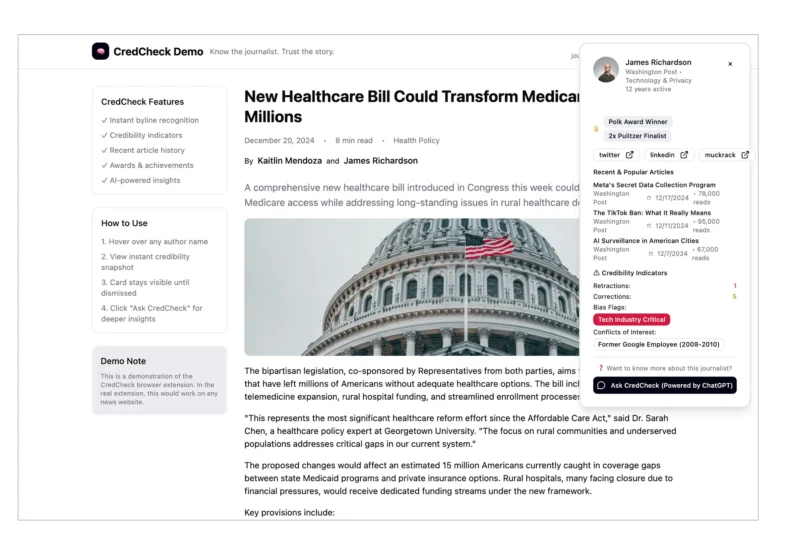
CredCheck
A Chrome extension that lets readers hover over any byline to instantly see a journalist’s credentials, awards, past articles, retractions, corrections, bias flags, and conflicts of interest — all in a single card. It brings transparency to the question every reader should be asking: why should I trust this writer?
TOOL 05
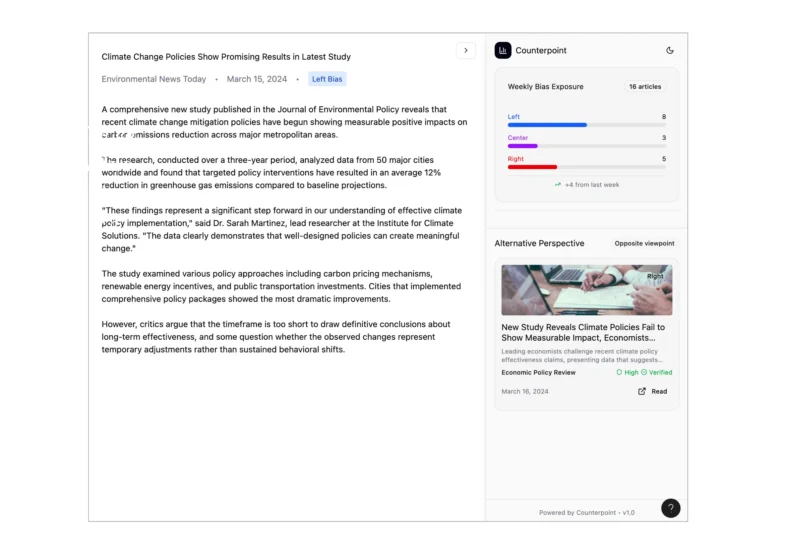
Counterpoint
A Chrome extension that tracks your weekly reading bias across left, center, and right sources, then surfaces verified alternative-perspective articles on the same topic. It helps readers actively broaden their media diet and encounter viewpoints they might otherwise never see.